
Trustindex verifies that the original source of the review is Google.
Recently had Dr Kosta Calligeros perform open reduction internal fixation (ORIF) surgery to repair a broken foot. Dr Calligeros was very easy to speak to, explained everything including potential side effects to the Surgery and any concerns I had, in a professional manner. Surgery at Peninsula Private Hospital went well, Highly recommend Dr Calligeros.Posted on Google
 larryk91I had a hip replacement carried out some years ago by Kosta and I am so grateful to him. I am now over 80 and regularly walk, jog and even do short runs with no pain or discomfort whatsover.Posted on Google
 Ray WalkerI highly recommend Dr Kosta Calligeros for any surgery. Had a right hip replacement with early and surprising mobility gain in a short time with physio. Thank you for my rejuvenated life without a limpPosted on Google
 Brendan JacksonKosta thank you so much for my new partial knee ,I would strongly recommend Kosta ,from day one Kosta makes you feel at ease and throughout the whole process very professional,and in my opinion very good at what he does thanks again one very happy patientPosted on Google
 glenice negroI am just reminded today that 2 years after my hip replacement that I am feeling really great, exercising and walking regularly with no pain at all. Thanks so much Kosta.Posted on Google
 Ray WalkerI was in need of a hip replacement and had to have a consultation with a surgeon. Kosta's way of explaining the procedure and his caring manner convinced me that he was the man for the job. I'm glad to say that all went well and his after care was well above what I expected. I'm happy to recommend his services to anyone!Posted on Google
 Robert BentKosta explained the procedure, so there were no surprises. Total knee replacement, no bruising not a lot of pain, very caring surgeon. Would recommend Kosta to anyone needing orthopaedic surgery. Glenda StanleyPosted on Google
 Gary & Glenda StanleyI had the great fortune of having my total hip replacement performed by Mr Kosta Calligeros. He had explained everything to me prior to surgery in a straight forward, easy to understand manner. I am very pleased with the results of the surgery and can honestly say he is a well respected, highly regarded surgeon with a pleasant nature, excellent bedside manner (disregard Suzi's comments, she's surely got the wrong guy). If something else breaks, I'd want Kosta to fix it. Thanks Kosta, you're a real gentleman and a fantastic surgeon!Posted on Google
 Al DittoThe Doctors and Staff at Principle Orthopaedics are fantastic. I highly recommend them to anyone that needs help with a bad knee or other problem. 10/10Posted on Google
 Daniel Atkin
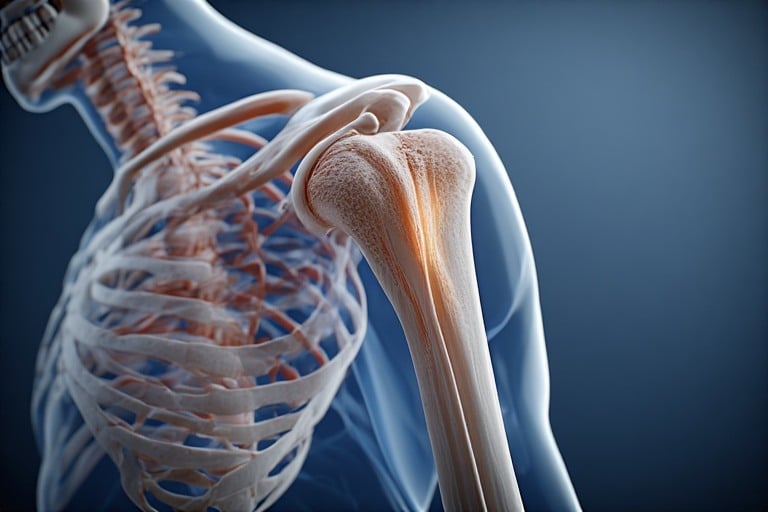
Shoulder bursitis is a common cause of shoulder pain and occurs when the bursa becomes inflamed. A bursa is a small fluid-filled sac that helps reduce friction between bones, tendons, and soft tissues around the shoulder. When this structure becomes irritated, it can lead to pain, tenderness, reduced movement, and difficulty with everyday activities such as lifting, reaching, dressing, or sleeping on the affected side.
What is shoulder bursitis?
The most commonly affected bursa in the shoulder is the subacromial bursa, which sits between the rotator cuff tendons and the acromion at the top of the shoulder blade. Its role is to allow the tendons to glide smoothly during shoulder movement. When the bursa becomes inflamed, the space in this part of the shoulder can become crowded and painful, particularly during overhead activity. Shoulder bursitis often occurs alongside shoulder impingement or rotator cuff irritation.
Causes of shoulder bursitis
Shoulder bursitis may develop from repetitive overhead activity, overuse, trauma, poor shoulder mechanics, or age-related wear. It can also be associated with rotator cuff tendinopathy, bone spurs, or other structural problems that increase friction within the shoulder. In some cases, bursitis develops after an injury, while in others it builds gradually over time due to repeated irritation.
Symptoms of shoulder bursitis
Symptoms can vary in severity, but commonly include pain over the outer or upper part of the shoulder, pain when lifting the arm, discomfort with reaching overhead or behind the back, tenderness, weakness, and night pain. Some patients also notice a painful arc of movement or feel that the shoulder catches or becomes stiff with use. Symptoms may worsen with repetitive activity or after sleeping on the affected shoulder.
Diagnosis
Diagnosis begins with a detailed history and physical examination. Your surgeon will assess where the pain is located, what movements reproduce symptoms, and whether there are signs of impingement, rotator cuff disease, or other shoulder pathology. Imaging such as X-rays, ultrasound, or MRI may be used to assess inflammation, identify bone spurs, and determine whether there is associated tendon damage or other structural change within the joint.
Non-surgical treatment
Most cases of shoulder bursitis can be treated without surgery. Initial treatment commonly includes activity modification, rest from aggravating movements, anti-inflammatory medication, physiotherapy, and in some cases a corticosteroid injection to reduce inflammation. Treatment is aimed at settling the inflamed bursa, improving shoulder mechanics, and addressing any contributing tendon or postural issues.
- Rest and modification of painful overhead or repetitive activities.
- Anti-inflammatory medication where appropriate.
- Physiotherapy to improve shoulder strength, posture, and movement patterns.
- Corticosteroid injection in selected cases to reduce inflammation and pain.
When is surgery considered?
Surgery may be considered when symptoms remain persistent despite appropriate non-surgical treatment, or when recurrent bursitis is associated with structural issues such as a bone spur, impingement, or rotator cuff pathology. Ongoing pain, weakness, sleep disturbance, and inability to return to work, sport, or normal activity may all be reasons to discuss surgical treatment. The exact procedure recommended depends on the cause of symptoms and whether other problems are present in the shoulder.
Shoulder bursitis surgery
Surgery for shoulder bursitis is usually performed arthroscopically using small keyhole incisions and a camera. The inflamed bursa is removed in a procedure called a bursectomy. If there is narrowing under the acromion or a bone spur contributing to irritation, a subacromial decompression or acromioplasty may also be performed to create more space for the rotator cuff tendons to move freely. If tendon damage is found, additional treatment such as rotator cuff repair may be recommended.
How the procedure is performed
Arthroscopic shoulder bursitis surgery is generally performed under general anaesthesia, often with a regional nerve block to assist with pain relief after the operation. Small incisions are made around the shoulder, and an arthroscope is inserted to allow the surgeon to inspect the joint and subacromial space. Special instruments are then used to remove inflamed bursal tissue and address any contributing bone or soft tissue impingement.
A typical procedure may include:
- General anaesthesia and patient positioning.
- Insertion of the arthroscope through small keyhole incisions.
- Inspection of the shoulder joint and subacromial space.
- Removal of the inflamed bursa (bursectomy).
- Removal of bone spurs or reshaping of the undersurface of the acromion if required.
- Treatment of associated pathology such as rotator cuff tearing if present.
- Closure of the small incisions and application of dressings.
Benefits of surgery
The aim of surgery is to reduce pain, improve movement, and relieve mechanical irritation within the shoulder. For patients with persistent symptoms that have not responded to conservative care, surgery may help restore function and make daily activities more comfortable. Outcomes are influenced by the underlying cause of bursitis, the presence of tendon damage, and adherence to postoperative rehabilitation.
Risks and complications
As with any shoulder procedure, there are potential risks and complications. These may include infection, bleeding, stiffness, ongoing pain, swelling, nerve injury, failure to improve symptoms, and the possibility that associated rotator cuff disease or other shoulder pathology may require further treatment. Your surgeon will discuss the specific risks relevant to your condition and planned procedure.
Recovery and rehabilitation
Recovery following arthroscopic treatment for shoulder bursitis is usually faster than for larger reconstructive procedures, but rehabilitation still plays an important role. A sling may be used for comfort for a short period, and early movement is often encouraged depending on the exact surgery performed. Physiotherapy is commonly recommended to restore range of motion, improve shoulder control, and gradually rebuild strength.
Recovery may include:
- Short-term use of a sling for comfort.
- Early gentle movement exercises as advised by your surgeon.
- Graduated physiotherapy to restore range of motion and strength.
- Progressive return to work, exercise, and sport depending on symptoms and any additional procedures performed.
Is shoulder bursitis surgery right for you?
If shoulder pain is ongoing despite rest, medication, injections, and physiotherapy, a surgical opinion may be appropriate. A careful clinical assessment and imaging review can help determine whether the pain is due to isolated bursitis, impingement, rotator cuff disease, or a combination of factors. Treatment is then tailored to your symptoms, goals, and the underlying cause of the problem.
Rotator Cuff Tear
Rotator Cuff Tear

Shoulder Surgery
Shoulder Surgery
Shoulder Replacement Surgery